Maritime-Based Early Childhood Curriculum Development Model
DOI:
https://doi.org/10.47453/hadlonah.v6i1.3108Keywords:
Kurikulum, Anak usia dini,, Berbasis, MaritimAbstract
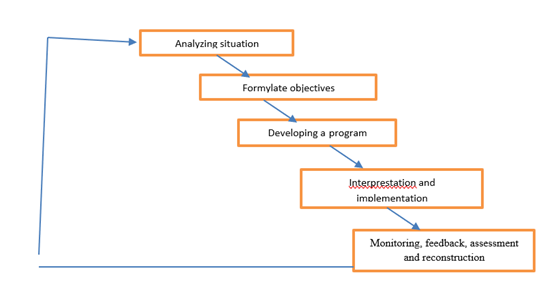
This research is motivated by exploring the utilization of maritime potential in PAUD institutions in the coastal areas of Banten so that there are no future generations who have an interest in working in coastal areas in order to develop maritime potential. Study This aim develops design Early Childhood curriculum in the field relevant maritime with need public maritime on the Coast north of Old Banten. The method used in study This is a Dynamic model. Research and development with refers to the development model curriculum Dynamic Skilbeck. Research steps development This covering Analyze situation, Formulate Objectives, Program preparation, Interpretation and implementation, Monitoring, feedback, assessment and reconstruction. Data collection techniques include observation and interviews. Data analysis used is descriptive qualitative. Based on results research, design curriculum field maritime load four indicator namely ; (1) introducing identity nation Indonesia as nation maritime ; (2) building knowledge, awareness and understanding child to potential sea ; (3) develop learning programs based on projects ; and (4) building attitude proud and love homeland. While experience relevant learning with need public maritime that is learning based on project, child given experience direct in fish processing, and grass sea become material food in Indonesia, especially in the Banten region. This study provides significant contributions to the development of maritime-based curriculum for early childhood education by formulating five main indicators in the design of maritime curriculum.
Downloads
References
Arifin, M. S. (2015). Model-model pengembangan kurikulum (Issue 15105241047).
Badan Pustaka Statistik. (2020). Keadaan ketenagakerjaan Indonesia Agustus 2020. Badan Pusat Statistik, XXiI, 05 N(91), 1–20.
Baden Pustaka Statistik. (2020). Statistik produksi perikanan Banten 2020. BPS Banten.
Banten Provincial Regulation. (2018). Peraturan Daerah Provinsi Banten tentang pengelolaan sumber daya kelautan dan perikanan. Pemerintah Provinsi Banten.
Bruner, J. (1961). The act of discovery. Harvard Educational Review, 31(1), 21–32. https://doi.org/10.17763/haer.31.1.gk0554x1427v2p6
Daris, L. (2019). Kurikulum pendidikan berbasis maritim di era revolusi industri 4.0. Penguatan Pendidikan Karakter Di Era Revolusi Industri, 4(10).
Daris, L. (2019). The role of maritime education in the Industrial Revolution 4.0. Journal of Maritime Studies, 15(2), 45–60.
Dewey, J. (1916). Democracy and education: An introduction to the philosophy of education. Macmillan.
Farchan, A., & Muhtadi, A. (2019). Indonesian Journal of Curriculum Pengembangan desain kurikulum maritim di Jepara. Indonesian Journal of Curriculum and Educational Technology Studies, 7(1), 27–36.
Farchan, S., & Muhtadi, A. (2019). Maritime-based curriculum development for early childhood education. Indonesian Journal of Early Childhood Education, 18(3), 78–90.
F. lise Chamisijatin. (2020). Telaah Kurikulum. Universitas Muhammadiyah Malang.
Gia Nikawanti, & Aca, I. (2021). Indonesia as the world’s maritime axis: Policy implications for sustainable maritime development. Journal of Maritime Policy, 10(1), 115–128.
Iskandar, H., & Hasbi, M. (2019). Pedoman pendidikan kemaritiman di satuan PAUD. 1–50.
Iskandar, I., & Hasbi, M. (2019). The importance of maritime awareness in early childhood education in Indonesia. Indonesian Journal of Early Childhood Development, 13(1), 67–75.
Lukman Daris, L. (2019). Reviving maritime culture in Indonesia’s educational curriculum. Marine Education Journal, 9(2), 33–47.
Nuryati, E., Sulistiyono, S., & Kurniawan, I. (2023). Maritime literacy and cultural awareness in early childhood education. Early Childhood Journal, 7(2), 45–59.
Nuryati, N., Hufad, A., & Rusdiyani, I. (2023). Pengembangan bahan ajar dalam menumbuhkan jiwa bahari pada anak usia dini. Jurnal Review Pendidikan Dan Pengajaran (JRPP), 6(4), 2909–2914.
Nurisshobakh, A., Sudirman, S., & Yuliana, Y. (2018). Indonesia as a maritime nation: Strengthening maritime identity through education. Journal of Maritime Studies, 17(4), 52–60.
Olivia, J. (1982). Curriculum as a dynamic plan. Curriculum Studies, 15(2), 28–39.
Olivia, P. F. (1982). Developing the curriculum. Little, Brown and Company.
Piaget, J. (1976). The child and reality: Problems of genetic psychology. Viking Press.
Prasetia, M. F., Maryani, E., & Ruhimat, M. (2024). Kajian pengembangan kurikulum maritim dalam menumbuhkan rasa cinta bahari siswa. Jurnal Penelitian Pendidikan Geografi, 9(2), 120–127.
Prasetia, S., Rahman, T., & Sulistyono, D. (2024). Indicators for developing maritime-based curriculum in early childhood education. Journal of Education and Culture, 16(1), 112–126.
Rahman, U. (2009). Karakteristik perkembangan anak usia dini. Lentera Pendidikan: Jurnal Ilmu Tarbiyah dan Keguruan, 12(1), 46–57. https://doi.org/10.24252/lp.2009v12n1a4
SAMAD, F. (2024). Model pembelajaran proyek berbasis budaya maritim dalam meningkatkan sikap peduli lingkungan laut pada anak usia dini di Provinsi Maluku Utara. Universitas Negeri Jakarta.
Sanjana, S. (2015). Curriculum development in the 21st century: A focus on project-based learning. International Journal of Educational Research, 12(4), 23–34.
Sanjana, W. (2015). Kurikulum dan Pembelajaran. PT. Fajar Interpratama Mandiri.
Sariono, S. (2013). Kurikulum 2013: Kurikulum generasi emas. E-Jurnal Dinas Pendidikan, 3(1), 1–9.
Soemarmi, A., & Diamantina, A. (2019). Konsep negara kepulauan dalam upaya perlindungan wilayah pengelolaan perikanan Indonesia. Masalah-Masalah Hukum, 48(3), 241. https://doi.org/10.14710/mmh.48.3.2019.241-248
Soemarmi, A., & Diamantina, L. (2019). Indonesia’s coastal resources and the role of maritime education. Marine Resource Management Journal, 22(1), 44–58.
Sterling, S. (2001). Sustainable education: Re-visioning learning and change. Green Books.
Sukmadinata, N. S. (2008). Pengembangan kurikulum: Teori dan praktek. Remaja Rosdakarya.
Sukmadinata, N. S. (2008). Curriculum development: Theory and practice. Bandung: Remaja Rosdakarya.
Vygotsky, L. (1978). Mind in society: The development of higher psychological processes. Harvard University Press.
Additional Files
Published
Issue
Section
License
Copyright (c) 2025 Authors

This work is licensed under a Creative Commons Attribution 4.0 International License.