Development of Simple Reflection Media to Support the Character of Mutual Cooperation through the Collaborative Reflection Model
DOI:
https://doi.org/10.47453/hadlonah.v7i2.4480Keywords:
Blok Ceria , Collaborative Reflection, Gotong Royong, reflective media, Early Childhood EducationAbstract
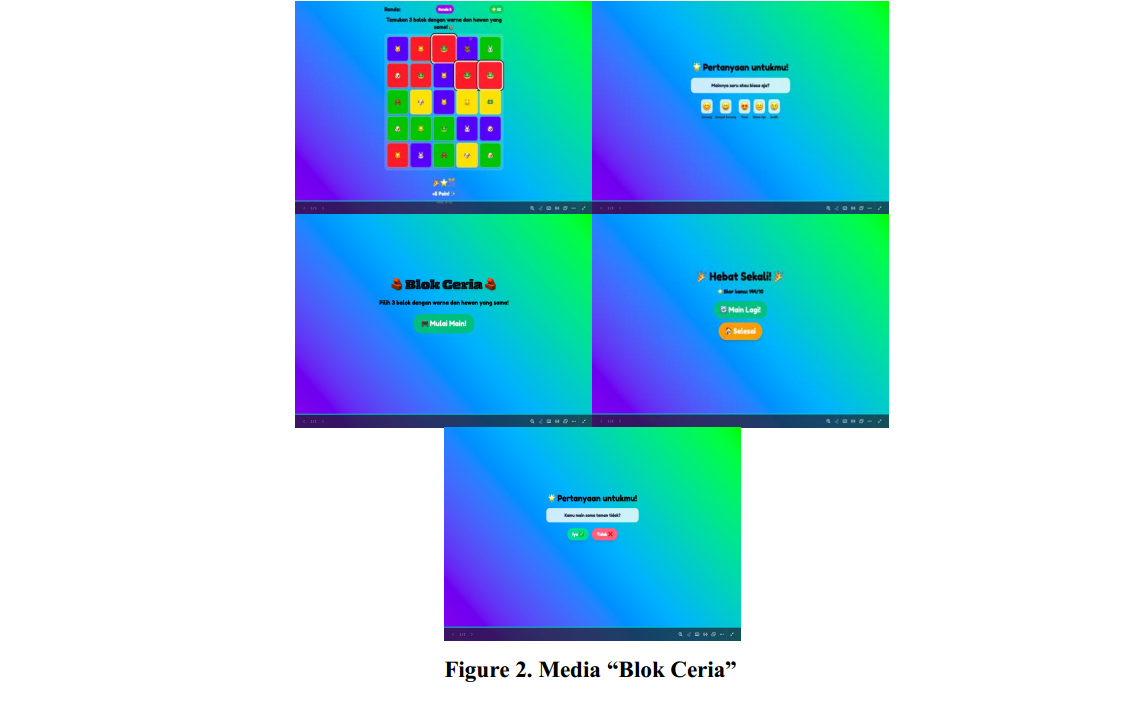
The cultivation of character in mutual cooperation in early childhood often faces challenges in the form of a lack of applicable learning media and an approach that does not involve active reflection from children. This study aims to develop and test the feasibility of a simple digital-based reflection media called "Blok Ceria" by applying the Collaborative Reflection model to support the character of early childhood mutual cooperation in daycare. The research method used is Research and Development (R&D) with the ADDIE (Analysis, Design, Development, Implementation, Evaluation) development model. The test subjects in this study involved 10 children aged 3–5 years at Daycare Jagat Solution. Data were collected through validation sheets of material and media experts, as well as observation sheets of children's mutual cooperation behavior, which were analyzed in a quantitative descriptive manner. The results of the study showed that the media "Blok Ceria" met the criteria very feasibly based on expert validation, with an average percentage of 87%. At the implementation stage, which was carried out for four days, the character of children's mutual cooperation increased progressively with an average overall achievement of 76.52% ("Good" category). The results of the observation showed a significant increase in the indicators of the ability to play together, discuss, show empathy, convey ideas, work together to solve problems, and accept the ideas of their peers. This study concludes that the integration of group play activities accompanied by structured collaborative reflection sessions through digital media is able to internalize the value of mutual cooperation concretely, so that it is suitable as an alternative instrument for character learning in PAUD and daycare institutions.
Downloads
References
Adeleke, M. A., Wirawan, K. A. S. I., Pradnyani, M. S. S., & Septiarini, N. I. (2024). Revolutionizing Education: Unleashing the Power of the ADDIE Model for Effective Teaching and Learning. JPI (Jurnal Pendidikan Indonesia), 13(1), 202–209. https://doi.org/10.23887/jpiundiksha.v13i1.68624
Aini, I., Adhe, K. R., Ningrum, M. A., Istiq’faroh, N., Haq, M. S., Kristanto, A., & Fitri, R. (2026). Pemanfaatan Media Digital dalam Menstimulasi Kemampuan Berpikir Kritis Anak Usia Dini di Abad 21. Murhum : Jurnal Pendidikan Anak Usia Dini, 7(1). https://doi.org/10.37985/murhum.v7i1.1804
Alotaibi, M. S. (2024). Game-based learning in early childhood education: a systematic review and meta-analysis. Frontiers in Psychology, 15. https://doi.org/10.3389/fpsyg.2024.1307881
Ardianti, T. R., & Susanti, S. (2022). Pengembangan Media Pembelajaran Interaktif Berbasis Android pada Mata Pelajaran Akuntansi Keuangan SMK. Edukatif: Jurnal Ilmu Pendidikan, 4(2), 2879–2892. https://doi.org/10.31004/edukatif.v4i2.2618
Branch, R. M. (2009). Instructional Design: The ADDIE Approach. In Instructional Design: The ADDIE Approach. Springer US. https://doi.org/10.1007/978-0-387-09506-6_1
Budiarti, E., & Yasmin Adar, S. (2023). Impact of Digital Media on Social-Emotional Development in Early Childhood: A Case Study at TK Kartika XX-46 Kendari. Golden Age: Jurnal Ilmiah Tumbuh Kembang Anak Usia Dini, 8(2), 89–98. https://doi.org/10.14421/jga.2023.82-04
Clarà, M., Mauri, T., Colomina, R., & Onrubia, J. (2019). Supporting collaborative reflection in teacher education: a case study. European Journal of Teacher Education, 42(2), 175–191. https://doi.org/10.1080/02619768.2019.1576626
Fauziddin, M., & Mufarizuddin. (2018). Useful of Clap Hand Games for Optimalize Cogtivite Aspects in Early Childhood Education. Jurnal Obsesi : Jurnal Pendidikan Anak Usia Dini, 2(2), 162. https://doi.org/10.31004/obsesi.v2i2.76
Gladh, M., Siljehag, E., Allodi, M. W., & Odom, S. L. (2022). Supporting children’s social play with peer-based intervention and instruction in four inclusive Swedish preschools. Frontiers in Education, 7. https://doi.org/10.3389/feduc.2022.943601
Hardiyana, A. (2020). Peningkatan Kecerdasan Interpersonal Anak Usia Dini Melalui Bermain. Hadlonah : Jurnal Pendidikan Dan Pengasuhan Anak.
Hastuti, R., Dewi, R. R. V. K., & Thoriquddin. (2025). Ketika Anak Bertanya dan Berefleksi: Benih-Benih Penerapan Deep Learning di Kelas PAUD. Khidmatussifa: Journal of Islamic StudiesVolume, 4. https://doi.org/10.56146/khidmatussifa.v4i1.328
Hayati, R. K., & Utomo, A. C. (2022). Penanaman Karakter Gotong Royong dan Tanggung Jawab melalui Metode Pembiasaan di Sekolah Dasar. Jurnal Basicedu, 6(4), 6419–6427. https://doi.org/10.31004/basicedu.v6i4.3248
Hibana, H., Nayla, M. E., & Nurhayati, K. (2024). Exploring the Role of Game-Based Learning in Early Childhood Cognitive Development: Perspectives from Teachers and Parents. Golden Age: Jurnal Ilmiah Tumbuh Kembang Anak Usia Dini, 9(4), 733–745. https://doi.org/10.14421/jga.2024.94-12
Hidayati, N., Badriah, A. N., Jannah, A. M., & Rianita. (2023). Peran Pendidik dalam Menstimulus Perkembangan Sosial Emosional Anak Usia Dini Pasca Masa Pandemi Covid-19. Hadlonah : Jurnal Pendidikan Dan Pengasuhan Anak.
Kurniasih, E. (2019). Media Digital Pada Anak Usia Dini. Jurnal Kreatif, 9(2). https://doi.org/https://doi.org/10.15294/kreatif.v9i2.25401
Latief, F., & Hijriah. (2022). Pengaruh Permainan Tradisional Mallogo dan Tokotokodiang Terhadap Kemampuan Sosial-Emosional Anak Usia 5-6 Tahun di Taman Kanak-Kanak Pertiwi Galesong. Hadlonah : Jurnal Pendidikan Dan Pengasuhan Anak.
Lestari, S. S., & Muarifah, A. (2022). Work Motivation and Self-Efficacy: Building Subjective Well-Being Teacher Raudhatul Athfal. Al-Athfal: Jurnal Pendidikan Anak, 8(1), 49–60. https://doi.org/10.14421/al-athfal.2022.81-05
Maimunah, U., Sari, H. M., Pebriani, E., & Bengkulu, U. D. (2025). Peningkatan Kemampuan Sosial Emosional Anak Melalui Kegiatan Gotong Royong Disekolah. Jurnal Multidisiplin, 1(3), 135–140. https://doi.org/10.70963/jm.v1i3