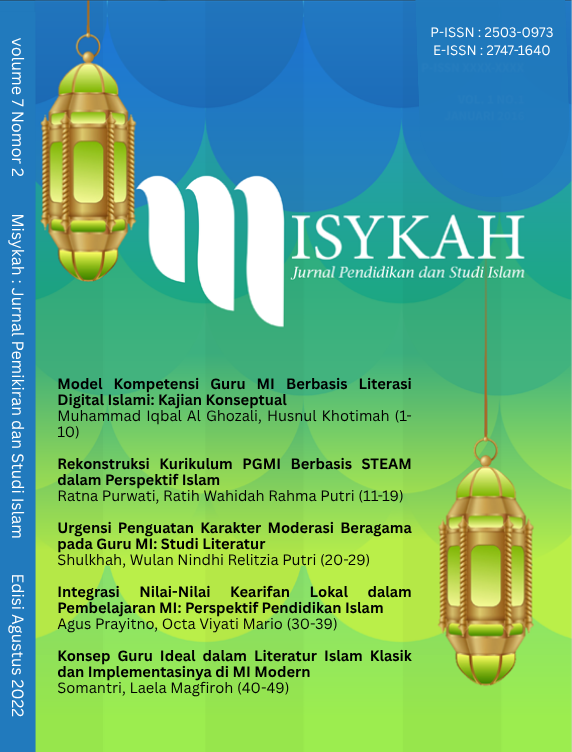
KONSEP GURU IDEAL DALAM LITERATUR ISLAM KLASIK DAN IMPLEMENTASINYA DI MI MODERN
Keywords:
Ideal Teacher, Classical Islamic Literature, Madrasah Ibtidaiyah, Islamic Pedagogy, Teacher CompetencyAbstract
The figure of the ideal teacher occupies a central position in the intellectual tradition of classical Islam, where scholars such as al-Ghazali, Ibn Jama'ah, and al-Zarnuji systematically articulated a comprehensive set of moral, intellectual, and spiritual attributes that define exemplary pedagogical conduct. In the contemporary context of Indonesian Islamic elementary schools (Madrasah Ibtidaiyah/MI), these classical formulations face the pressing challenge of being translated into modern institutional frameworks without losing their normative integrity. This study aims to critically examine the concept of the ideal teacher as constructed in classical Islamic pedagogical literature and to analyze the degree to which these attributes are implementable within the operational realities of modern MI. Employing a qualitative library research methodology, this investigation systematically reviews and analyzes primary classical Islamic texts alongside contemporary peer-reviewed scholarship on Islamic teacher education. The findings reveal that classical Islamic attributes of the ideal teacher encompassing scholarly authority, moral exemplarity, affective commitment to students, and spiritual accountability retain profound relevance for modern MI, provided that they are contextually reinterpreted and institutionally supported through policy, curriculum, and professional development frameworks.
Downloads
References
Al-Ghazali, A. H. M. (2020). Ihya ulum al-din: Menghidupkan ilmu-ilmu agama (A. Nata, Trans.). Jakarta: Republika Penerbit.
Barnawi, & Arifin, M. Z. (2022). Kinerja guru: Profesionalisme guru dalam prespektif global dan lokal. Yogyakarta: Ar-Ruzz Media.
Bashori, K. (2021). Pembentukan karakter Islami siswa MI: Peran keteladanan guru dalam perspektif pendidikan klasik. Jurnal Pendidikan Islam, 10(1), 45–64. https://doi.org/10.14421/jpi.2021.101.45
Hidayat, R., & Machali, I. (2022). Pengelolaan pendidikan: Konsep, prinsip, dan aplikasi dalam mengelola sekolah dan madrasah (edisi ke-2). Yogyakarta: Kaukaba Dipantara.
Mulyasa, E. (2021). Menjadi guru profesional: Menciptakan pembelajaran kreatif dan menyenangkan (edisi ke-15). Bandung: Remaja Rosdakarya.
Nata, A. (2021). Pemikiran pendidikan Islam: Kajian filosofis dan praktis (edisi revisi). Jakarta: Rajawali Pers.
Rochman, C., & Gunawan, H. (2021). Rekonstruksi kurikulum PGMI berbasis adab keguruan klasik Islam. Jurnal Pendidikan Guru MI, 8(2), 112–130. https://doi.org/10.24042/jpgmi.v8i2.9145
Siyoto, S., & Sodik, M. A. (2022). Dasar metodologi penelitian (edisi ke-2). Yogyakarta: Literasi Media Publishing.
Sugiyono. (2021). Metode penelitian kualitatif: Untuk penelitian yang bersifat eksploratif, entrepretif, interaktif dan konstruktif (edisi ke-4). Bandung: Alfabeta.
Syarnubi, S. (2021). Profesionalisme guru PAI dalam membentuk karakter religius siswa di era milenial. Jurnal PAI Raden Fatah, 3(1), 68–85. https://doi.org/10.19109/pairf.v3i1.5631
Ulfah, M., & Wibowo, A. (2022). Kompetensi kepribadian guru MI dalam perspektif standar nasional dan adab keguruan Islam. Ta'dibuna: Jurnal Pendidikan Islam, 11(2), 189–208. https://doi.org/10.32832/tadibuna.v11i2.6892
Zed, M. (2022). Metode penelitian kepustakaan (edisi ke-3). Jakarta: Yayasan Pustaka Obor Indonesia.