Structured Parenting and Child Independence in Autism: A Socioeconomic Comparison
DOI:
https://doi.org/10.47453/hadlonah.v7i1.4092Keywords:
autism spectrum disorder; parenting perspective; family context; socioeconomic status; early childhood education, Autism Spectrum Disorder, Parenting Perspective, Family Context, Socioeconomic Status, Early Childhood EducationAbstract
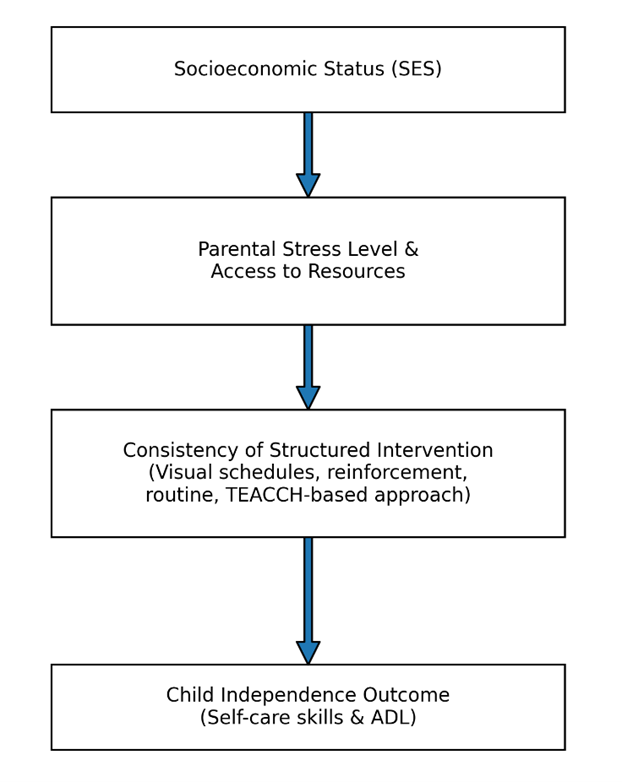
The presence of a neurodevelopmental disorder characterized by persistent social-communicative impairments and restricted behavioural patterns significantly disrupts family organizational structures and established daily routines. Families navigating the care of a child with such a diagnosis encounter multifaceted challenges, including considerable time commitments necessitated by engagement in intensive therapeutic modalities and substantial financial burdens. Furthermore, caregivers must maintain considerable scheduling adaptability to address the individualized behavioural profiles and developmental requirements of their diagnosed offspring. This investigation employed a qualitative phenomenological methodology encompassing structured observation protocols, semi-structured interviewing procedures, and documentary analysis. The final sample encompassed 12 dyadic parent-child units from heterogeneous socioeconomic backgrounds, spanning upper to middle-class socioeconomic classifications. The findings reveal that upper-middle-class families tend to implement structured and consistent parenting strategies, including the use of visual schedules, family-based monitoring systems, and regular progress evaluations, which support the development of children’s independence. In contrast, lower-middle-class families often rely on adaptive and improvised strategies due to financial constraints and work-related fatigue, resulting in less consistent intervention practices. The study also found that while higher socioeconomic status is associated with more structured parenting approaches, it is also linked to higher levels of parental stress due to increased expectations and involvement in intensive interventions.
Downloads
References
Abdillah, A., Widianingsih, I., Buchari, R. A., & Nurasa, H. (2025). Inclusive resilience in Indonesia: case of disability anticipation within inclusive development. Discover Social Science and Health, 5(1), 40. https://doi.org/10.1007/s44155-025-00190-9
Abualait, T., Alabbad, M., Kaleem, I., Imran, H., Khan, H., Kiyani, M. M., & Bashir, S. (2024). Autism Spectrum Disorder in Children: Early Signs and Therapeutic Interventions. Children, 11(11), 1311. https://doi.org/10.3390/children11111311
Advanced Autism Services. (2025, March 30). The Role of Positive Reinforcement in Autism Therapy. Advancedautism.Com. https://www.advancedautism.com/post/the-role-of-positive-reinforcement-in-autism-therapy
American Speech-Language-Hearing Association. (2024). Autism and Autism Spectrum Disorder. ASHA. https://www.asha.org/practice-portal/clinical-topics/autism/
Asa, G. A., Fauk, N. K., Mwanri, L., & Ward, P. R. (2021). Understanding Barriers to the Access to Healthcare and Rehabilitation Services: A Qualitative Study with Mothers or Female Caregivers of Children with a Disability in Indonesia. International Journal of Environmental Research and Public Health, 18(21), 11546. https://doi.org/10.3390/ijerph182111546
Brady, R., Maccarrone, A., Holloway, J., Gunning, C., & Pacia, C. (2020). Exploring Interventions Used to Teach Friendship Skills to Children and Adolescents with High-Functioning Autism: a Systematic Review. Review Journal of Autism and Developmental Disorders, 7(4), 295–305. https://doi.org/10.1007/s40489-019-00194-7
Butterfly Paediatric Therapy. (2025). Self-Care Skills For Children. Butterflytherapy.Com. https://butterflytherapy.com/services/occupational-therapy/self-care-skills/
Chen, Y., Jenkins, C. A., Charlton, R. A., Happé, F., Mandy, W., & Stewart, G. R. (2024). “Utterly Overwhelming”—A Mixed-Methods Exploration of Sensory Processing Differences and Mental Health Experiences in Middle-Aged and Older Autistic Adults. Autism in Adulthood. https://doi.org/10.1089/aut.2024.0031
Communicationclubhouse.com. (2024). Positive vs negative reinforcement in ABA therapy. The Clubhouse. https://www.communicationclubhouse.com/blog/aba-positive-reinforcement/
Creswell, J. W., & Poth, C. N. (2017). Qualitative Inquiry and Research Design: Choosing Among Five Approaches. SAGE Publications. https://books.google.co.id/books?id=gX1ZDwAAQBAJ
Deolinda, A. R. (2025, January 31). Understanding and Utilizing the TEACCH Method. Autism Parenting Magazine. https://www.autismparentingmagazine.com/asd-teacch-method-works/
First, M. B. (2013). Diagnostic and Statistical Manual of Mental Disorders, 5th Edition, and Clinical Utility. Journal of Nervous & Mental Disease, 201(9), 727–729. https://doi.org/10.1097/NMD.0b013e3182a2168a
Ghalichi, F., Ghaemmaghami, J., Malek, A., & Ostadrahimi, A. (2016). Effect of gluten free diet on gastrointestinal and behavioral indices for children with autism spectrum disorders: a randomized clinical trial. World Journal of Pediatrics, 12(4), 436–442. https://doi.org/10.1007/s12519-016-0040-z
Gratefulcareaba.com. (2025). TEACCH Method For Autism. Grateful Care ABA. https://www.gratefulcareaba.com/blog/teacch-method-for-autism
Hodgdon, L. A. (1999). Solving Behavior Problems in Autism: Improving Communication with Visual Strategies. Quirk Roberts Publishing.
Joinson, C., Heron, J., Von Gontard, A., Butler, U., Emond, A., & Golding, J. (2009). A Prospective Study of Age at Initiation of Toilet Training and Subsequent Daytime Bladder Control in School-Age Children. Journal of Developmental & Behavioral Pediatrics, 30(5), 385–393. https://doi.org/10.1097/DBP.0b013e3181ba0e77
Kelly, A. B., Garnett, M. S., Attwood, T., & Peterson, C. (2008). Autism Spectrum Symptomatology in Children: The Impact of Family and Peer Relationships. Journal of Abnormal Child Psychology, 36(7), 1069–1081. https://doi.org/10.1007/s10802-008-9234-8
Kostiukow, A., Strzelecki, W., Poniewierski, P., & Samborski, W. (2019). The estimation of the functioning of families with ASD children. AIMS Public Health, 6(4), 587–599. https://doi.org/10.3934/publichealth.2019.4.587
Leicspart.nhs.uk. (2024). Daily Life Skills for Autistic People. Leicestershire Partnership. https://www.leicspart.nhs.uk/autism-space/health-and-lifestyle/daily-life-skills-for-autistic-people/
Mesibov, G. B., Shea, V., Schopler, E., Adams, L., Merkler, E., Burgess, S., Mosconi, M., Chapman, S. M., Tanner, C., & Van Bourgondien, M. E. (2004). The Teacch Approach to Autism Spectrum Disorders. Springer US. https://doi.org/10.1007/978-0-306-48647-0
Miles, M. B., Huberman, A. M., & Saldana, J. (2013). Qualitative Data Analysis: A Methods Sourcebook (3rd ed.). SAGE Publications.
National Research Council. (2001). Educating Children with Autism. National Academies Press. https://doi.org/10.17226/10017
Negi, K., Saini, V., Kumar, S., Sharma, U., & Jacob, N. E. (2024). Stress Assessment in Parents of Children With Autism Spectrum Disorder: A Prospective Case-Control Study. Cureus. https://doi.org/10.7759/cureus.70438
Osborne, L. A., McHugh, L., Saunders, J., & Reed, P. (2008). Parenting Stress Reduces the Effectiveness of Early Teaching Interventions for Autistic Spectrum Disorders. Journal of Autism and Developmental Disorders, 38(6), 1092–1103. https://doi.org/10.1007/s10803-007-0497-7
Rabell, A. (2024, October 15). Everyday Independence for Autistic Children: Building Self Care Skills with Compassion. CST Academy. https://cstacademy.com/resources/articles/autism-self-care-skills/
Rezendes, D. L., & Scarpa, A. (2011). Associations between Parental Anxiety/Depression and Child Behavior Problems Related to Autism Spectrum Disorders: The Roles of Parenting Stress and Parenting Self-Efficacy. Autism Research and Treatment, 2011, 1–10. https://doi.org/10.1155/2011/395190
Shaw, K. A., Williams, S., Patrick, M. E., Valencia-Prado, M., Durkin, M. S., Howerton, E. M., Ladd-Acosta, C. M., Pas, E. T., Bakian, A. V., Bartholomew, P., Nieves-Muñoz, N., Sidwell, K., Alford, A., Bilder, D. A., DiRienzo, M., Fitzgerald, R. T., Furnier, S. M., Hudson, A. E., Pokoski, O. M., … Maenner, M. J. (2025). Prevalence and Early Identification of Autism Spectrum Disorder Among Children Aged 4 and 8 Years — Autism and Developmental Disabilities Monitoring Network, 16 Sites, United States, 2022. MMWR. Surveillance Summaries, 74(2), 1–22. https://doi.org/10.15585/mmwr.ss7402a1
Stokes, S. (2025). Structured Teaching: Strategies for Supporting Students with Autism? https://media.naset.com/fileadmin/user_upload/Autism_Series/Structured_Teaching/Structured_Teaching_Strategies.pdf
Zwick, G. P. (2017). Neuropsychological assessment in autism spectrum disorder and related conditions. Dialogues in Clinical Neuroscience, 19(4), 373–379. https://doi.org/10.31887/DCNS.2017.19.4/gzwick